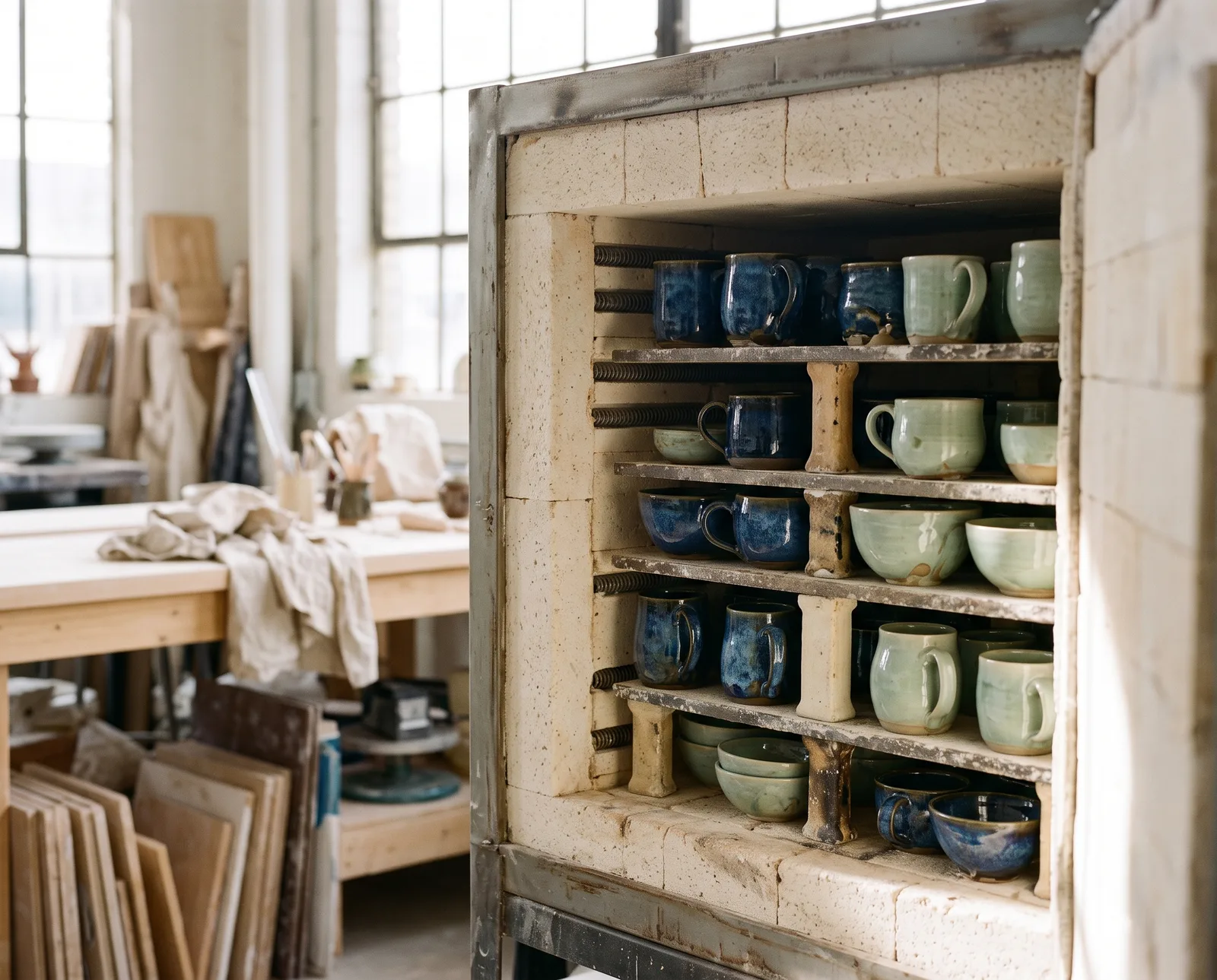
Every cup on our counter is stoneware, fired to 1,260°C. That makes it tougher than most people expect, and a lot tougher than the earthenware mugs you find in gift shops. Here’s how to keep yours going.
Dishwashers and microwaves
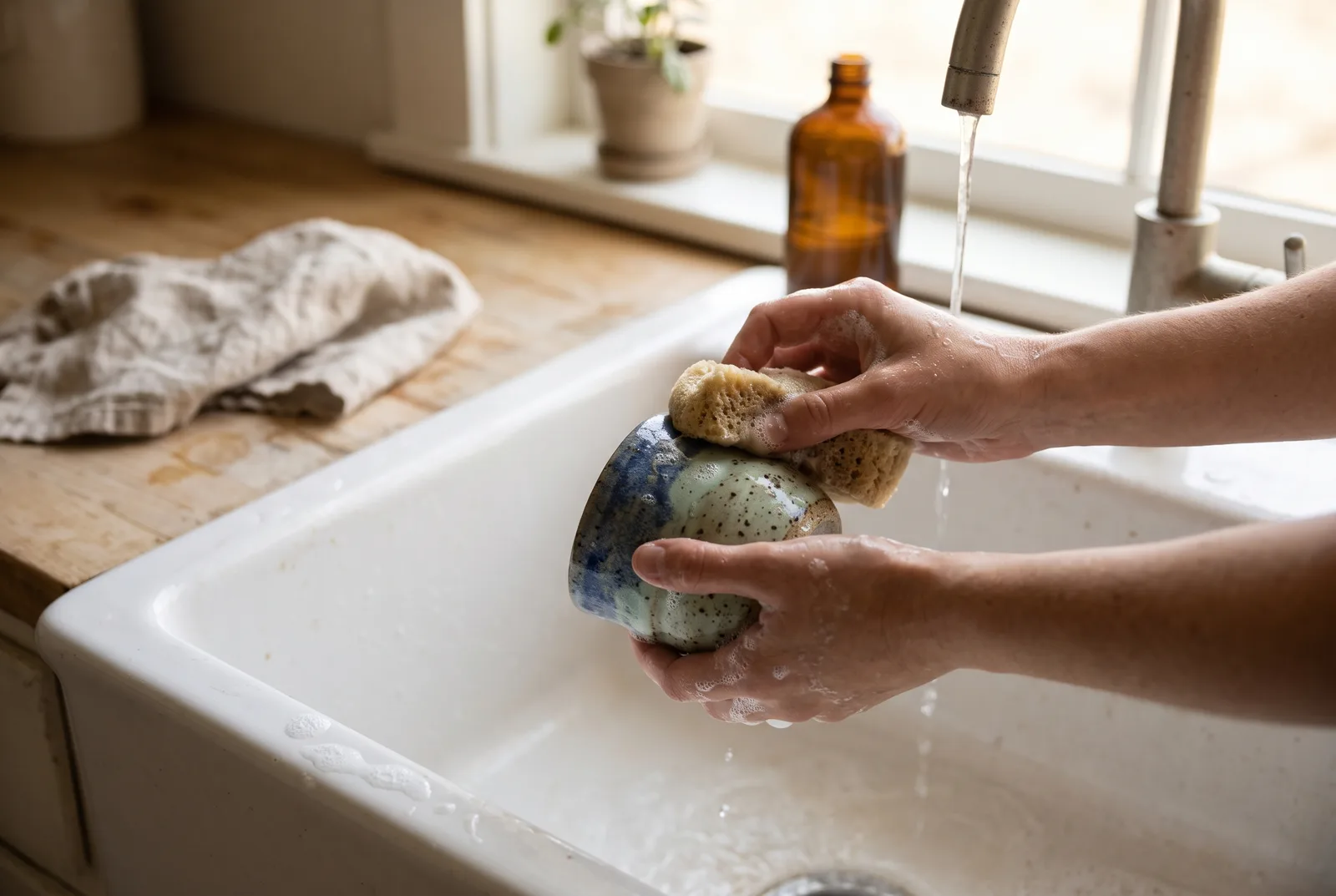
Our cups are dishwasher and microwave safe. We test every glaze for both before it goes on the shelf. That said, hand-washing keeps the glaze glossy for longer, especially on the darker cobalt and tenmoku glazes, which can dull slightly after a few hundred dishwasher cycles.
Sudden changes in temperature
The one thing stoneware really dislikes is thermal shock. Don’t pour boiling water into a cup that has just come out of the fridge, and don’t put a hot cup on a cold stone worktop and fill it with ice.
- Warm a cold cup with hot tap water first.
- Never put an empty cup in the microwave.
- Keep cups out of the oven unless we’ve told you a piece is ovenproof.
Crazing, chips and the speckles
Fine lines in the glaze, called crazing, are part of some glazes and are sealed underneath. A chip on the rim is different: if one appears, stop using the cup for drinks and bring it in. We can’t repair it, but we’ll give you 25% off a replacement.
The speckles in our oat glaze are iron in the clay coming through. Every cup has a different pattern.
Stains
Tea and coffee stains come off with a paste of bicarbonate of soda and a little water. Avoid scouring pads, which scratch the glaze.
Looked after like this, your cup should outlast the coffee machine, and probably us.